





Access & Scaffolds
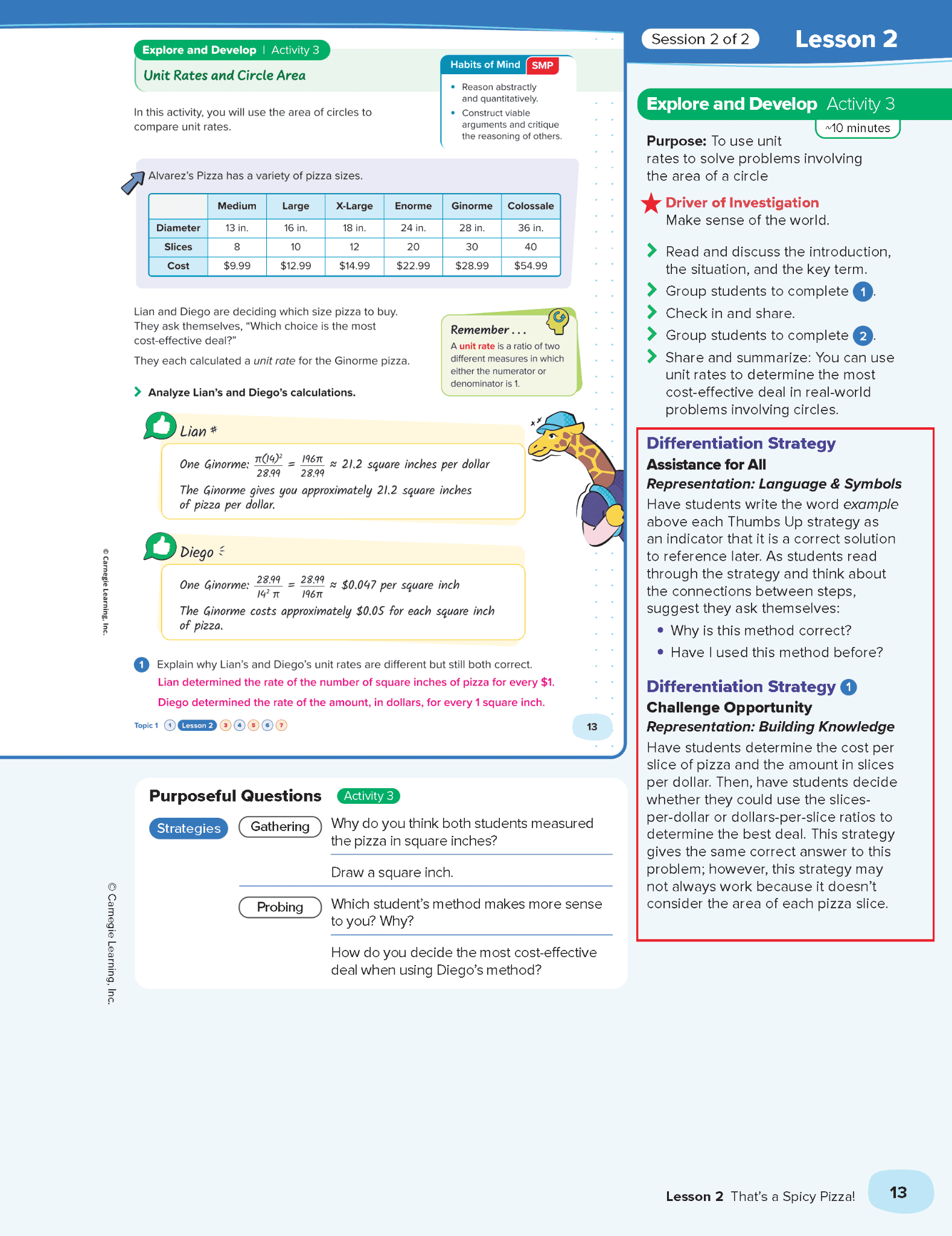
ClearMath California offers a structured framework for scaffolding and differentiation that is integrated into the core lesson design. Differentiation Strategies, Purposeful Questions, Mathematical Language Routines (MLR) integration, and the Concept/Re-Engagement lesson cycle each serve distinct functions in supporting diverse learners. Most lessons offer "Language Links" and other features that leverage students' prior knowledge and lived experiences as valuable assets.

Open Tasks
In ClearMath California, students are expected to grapple with worthwhile mathematical problems that invite investigation, discussion, and reflection. The tasks are designed to be unpacked over time, encouraging students to make connections, test ideas, and justify their thinking as they develop mathematical understanding. Teacher guidance focuses on noticing and responding to student thinking, helping students build understanding through discussion while keeping the intellectual work centered on students.

Assessment Tools
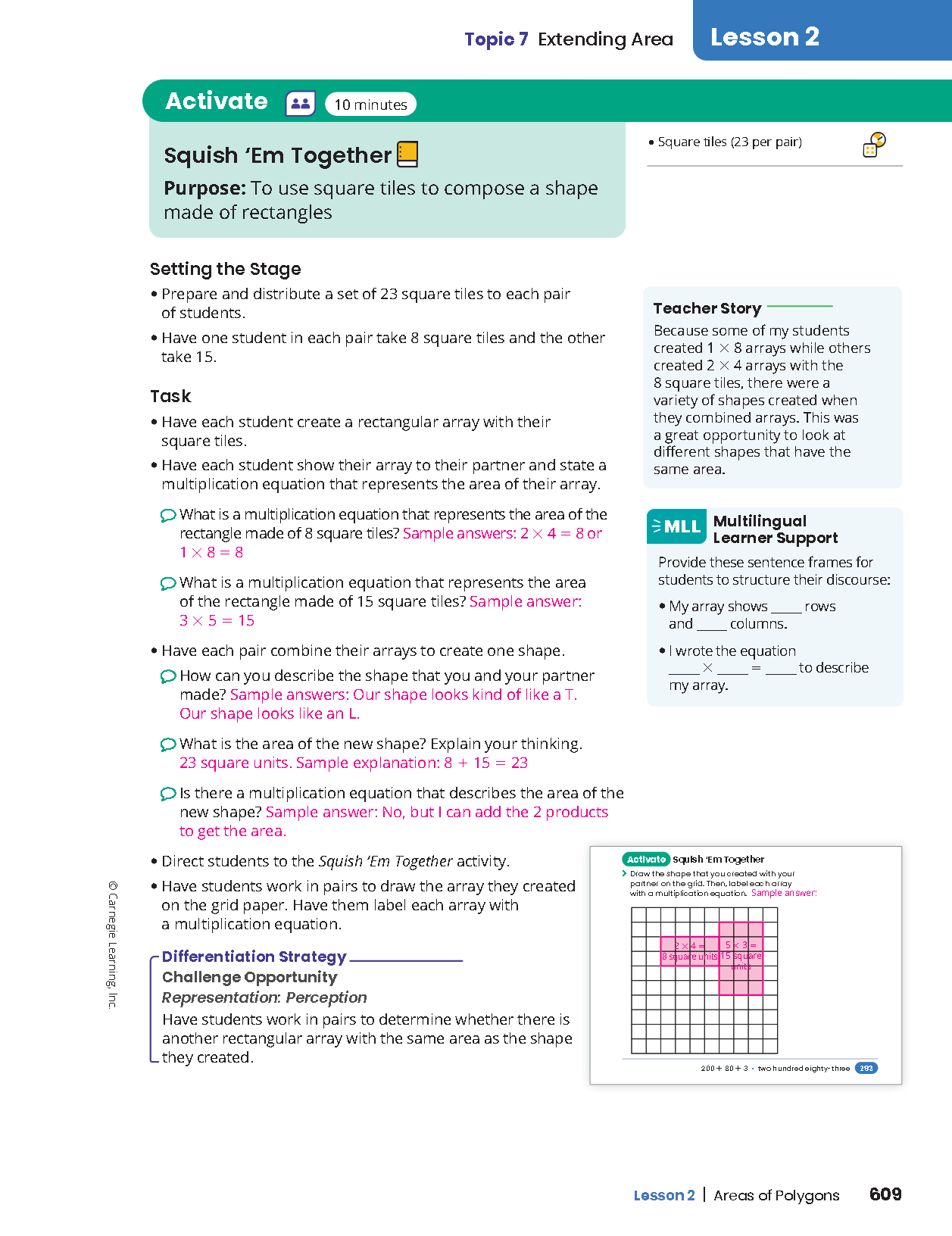
Assessment for ClearMath California is designed as a continuous decision-making process. Evidence collected throughout the instructional cycle is paired with tools that help teachers interpret student understanding, identify instructional priorities, and determine next steps while engaging students in monitoring their own learning and progress. Assessment information from classroom activities and MATHia provides multiple sources of evidence that teachers can use when planning instruction and targeted support.

Teacher Planning & Knowledge
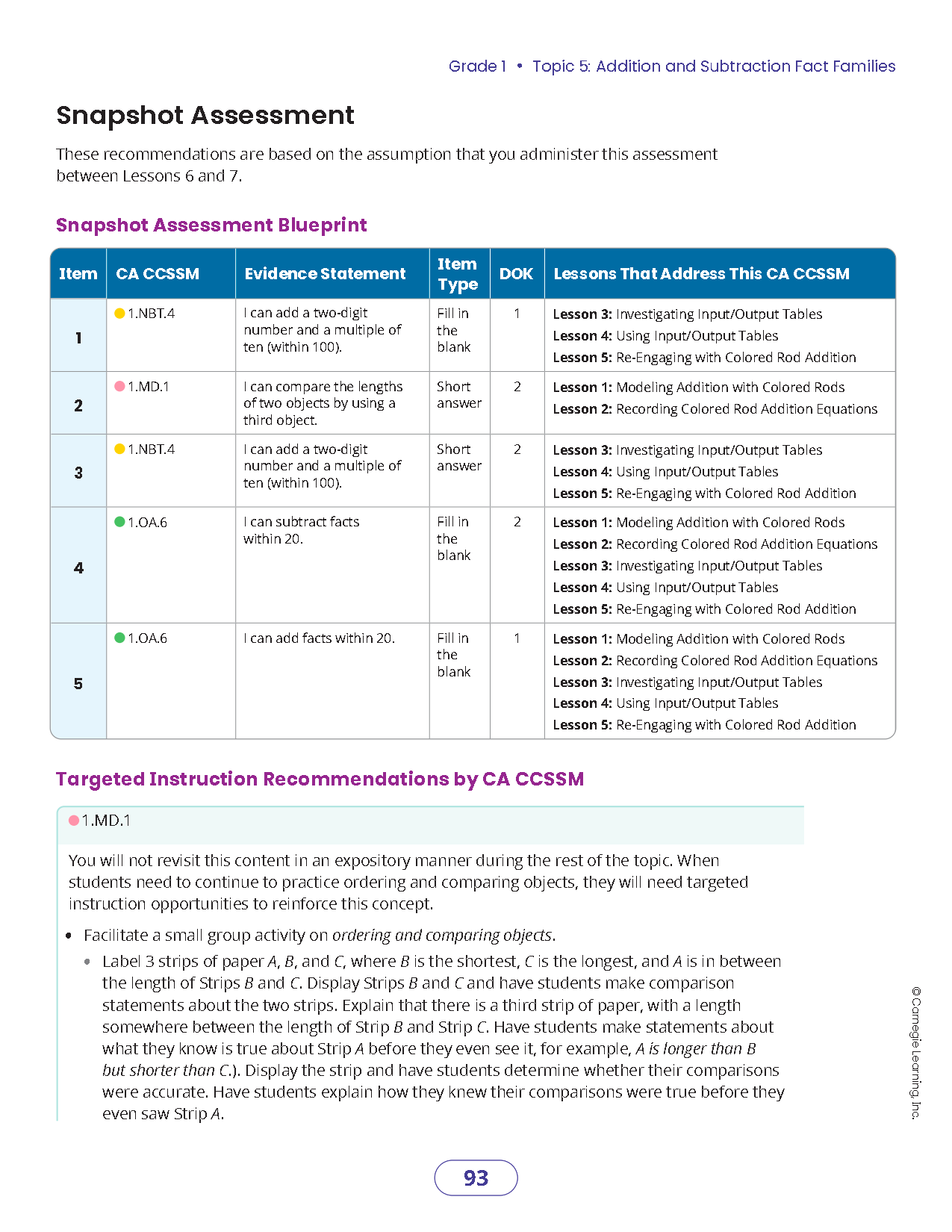
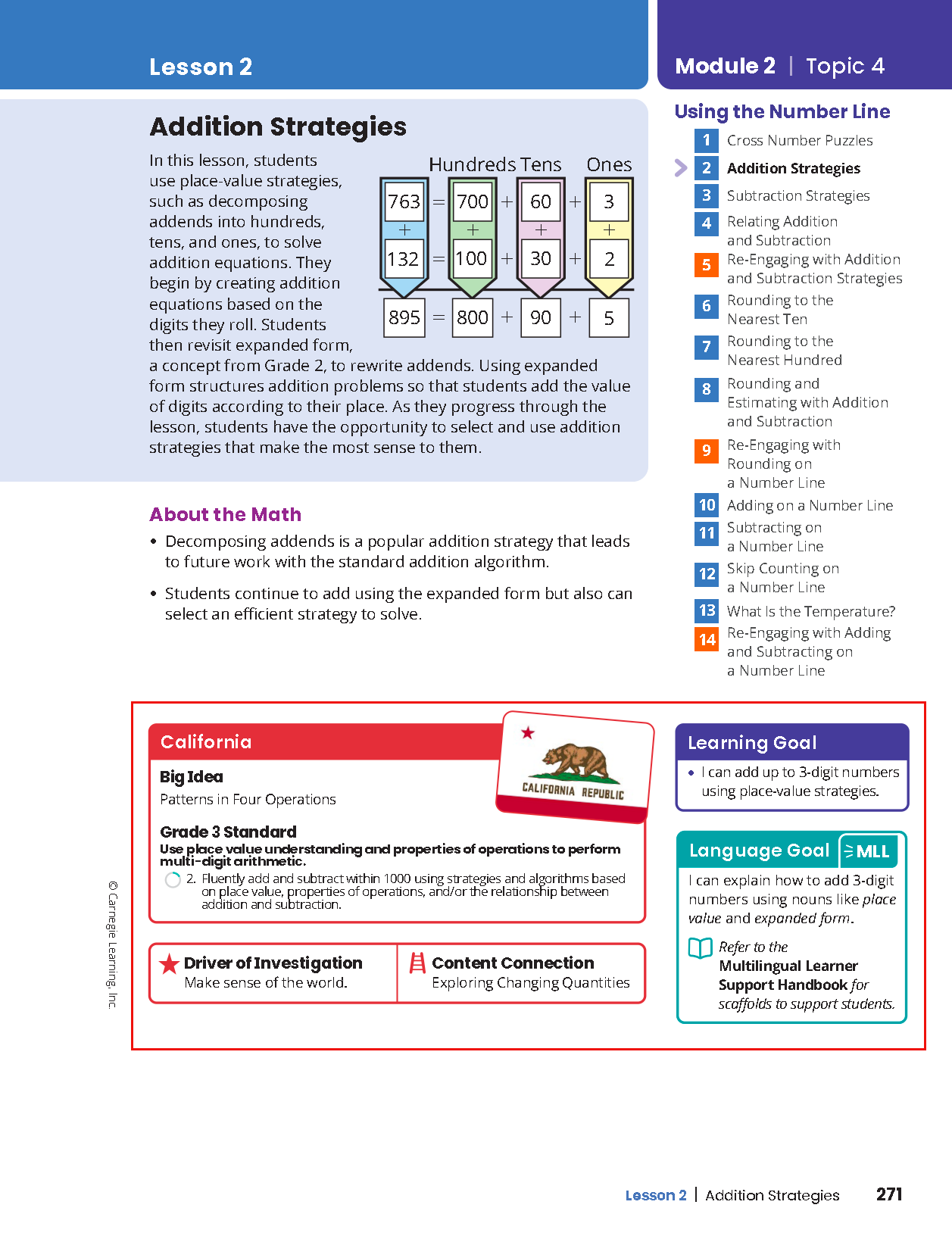
ClearMath California provides planning across TK–8 and is organized around a consistent instructional framework. Each lesson begins with learning goals, content connections, language goals, and learning prompts that help teachers establish the mathematical purpose, activate prior learning, identify language demands, and communicate clear expectations for what students will investigate and understand. This consistent structure makes it easier for teachers to navigate the curriculum while maintaining coherence across grades

Lesson structure
Across the units and lessons reviewed, materials did not consistently include explicit guidance for implementing accommodations in assessments such as oral responses, extended time, or the use of manipulatives while preserving the intended mathematical learning goal. Districts may wish to establish local guidance to support equitable, UDL-aligned assessment practices.

Breadth of tools
In the middle grades, in particular, is integrate into MATHia with assessment, intervention, and personalized learning. Districts should establish clear expectations for student use, data review, and instructional decision-making, while considering technology access, scheduling, and professional learning needed to implement the digital component consistently.