




Bridges in Mathematics, Third Edition: A K-5 comprehensive mathematics curriculum that develops conceptual understanding through hands-on learning, visual models, mathematical discourse, and connected instructional, assessment, and planning resources.

Between the Greens

Bridges in Mathematics

Categories

Explore curriculum

Program Organization

Bridges in Mathematics, Third Edition is a comprehensive mathematics curriculum organized around conceptual understanding, visual models, and mathematical discourse. Lessons incorporate hands-on learning, number sense routines, and problem-solving experiences that connect mathematical ideas over time. The program includes print and digital instructional resources, assessments, intervention materials, and teacher planning supports.

Quick Overview

Reviewed by EdReports*
Meets Expectations for Alignment & Usability
Core Materials Printed
Student Digital Platform
LMS Integration
Illustrative Math Derivative
TK Program
Algebra 1/Math 1 Aligned
Full High School Aligned
Spanish Teachers' Edition

Design Highlights & Considerations

Design Highlights

Access & Scaffolds

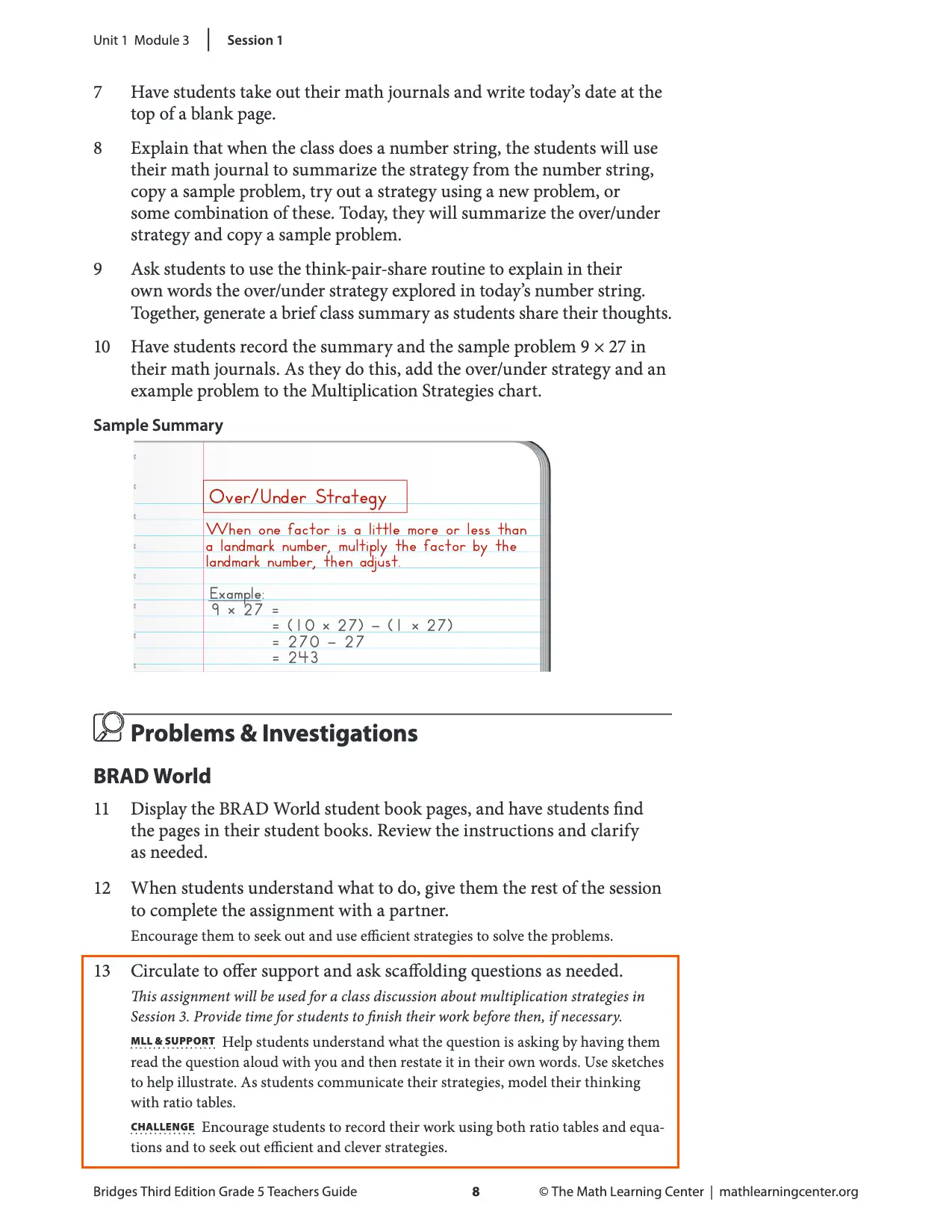
In Bridges in Mathematics Third Edition, students engage with the same grade-level mathematics through shared investigations, Work Places, visual models, and mathematical discussions that provide multiple entry points without changing the mathematical goal. Many Work Place games incorporate built-in difficulty variations that maintain the core skill while adjusting the entry point. Printed Work Place Sentence Frames offer a more advanced set alongside the base version, and core student materials are available in Spanish transadaptation
Example+

Open Tasks

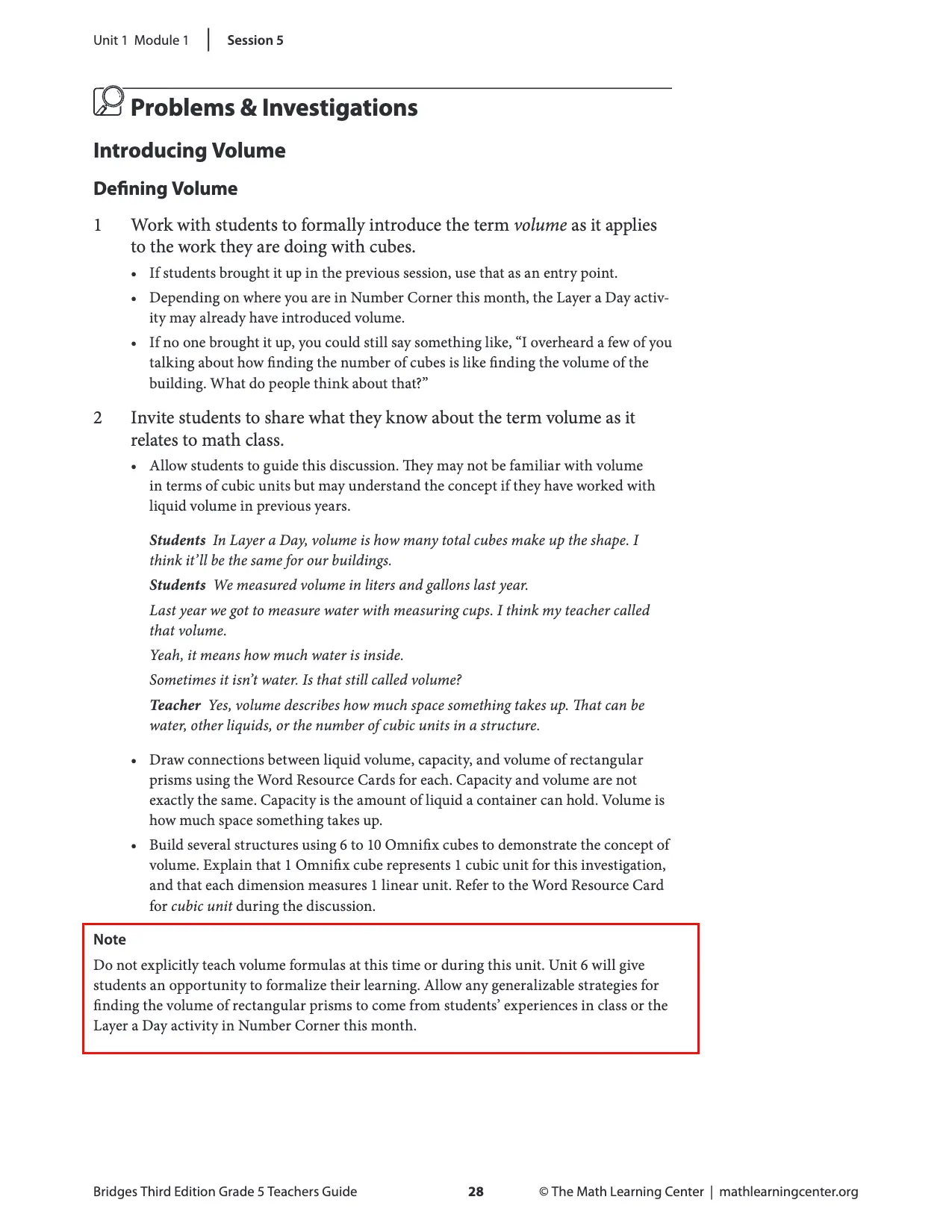
Bridges in Mathematics Third Edition sessions begin with contextualized Problems and Investigations that promote sense-making prior to the introduction of formal strategies. Number Strings and Math Forums are intentionally designed to elicit and compare multiple named, student-generated strategies. Visual models and manipulatives support students in representing and connecting their thinking. Teacher guidance, including anticipated strategies and discussion prompts, helps teachers connect student-generated methods to broader mathematical ideas and increasingly sophisticated strategies.
Example+

Assessment Tools

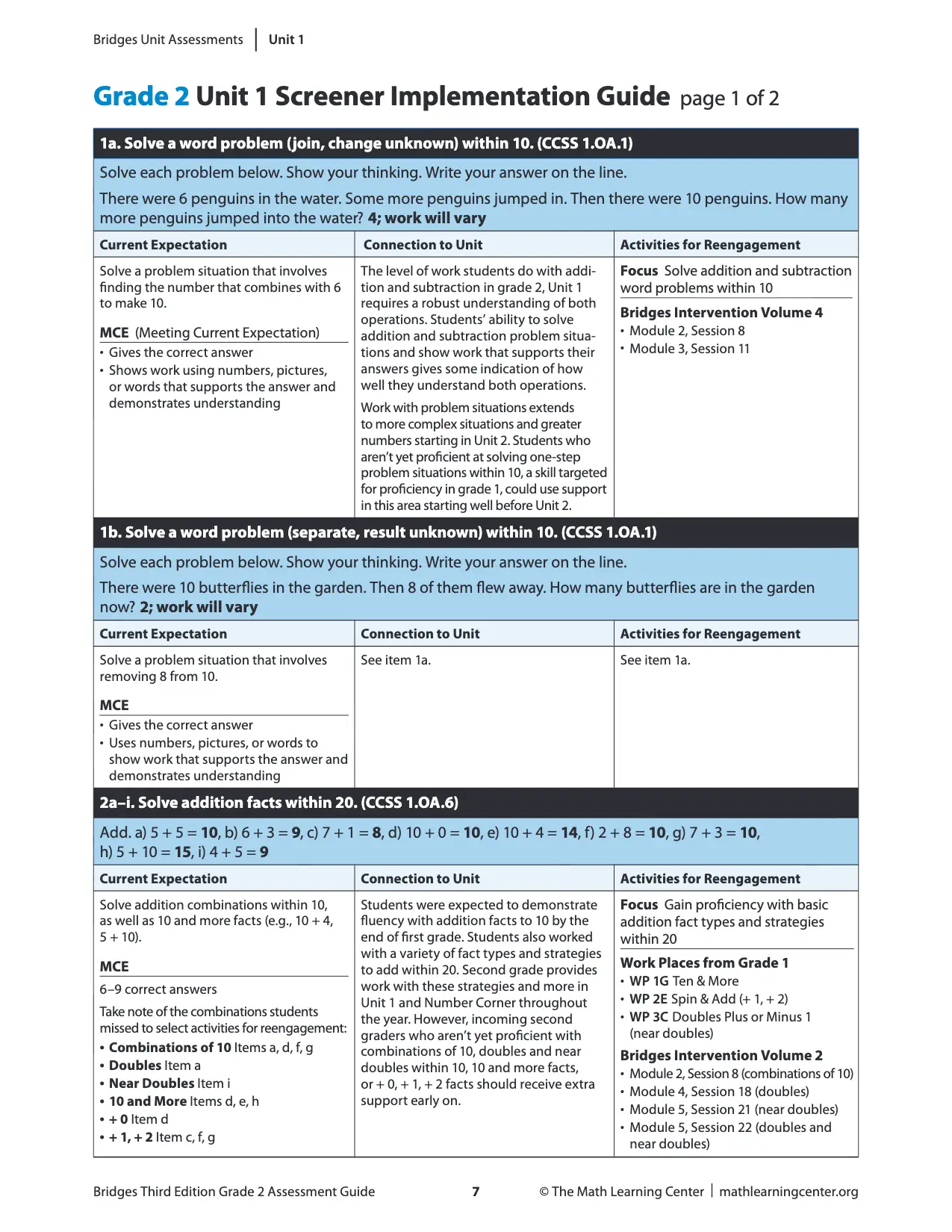
Bridges in Mathematics Third Edition features a clearly sequenced system for assessing student knowledge consisting of a Unit Screener, mid-unit Checkpoints or Work Samples, and a Unit Assessment, all mapped to standard-coded subscores and reflected in Bridges Intervention's Progress Monitoring cycle. Daily observation during Work Places and Sessions serves as a primary, structured source of evidence, and scoring guides recognize both reasoning and correct answers. Checkpoint Differentiation Suggestions tables link missed items to specific, asset-based next-step resources.
Example+

Teacher Planning & Knowledge

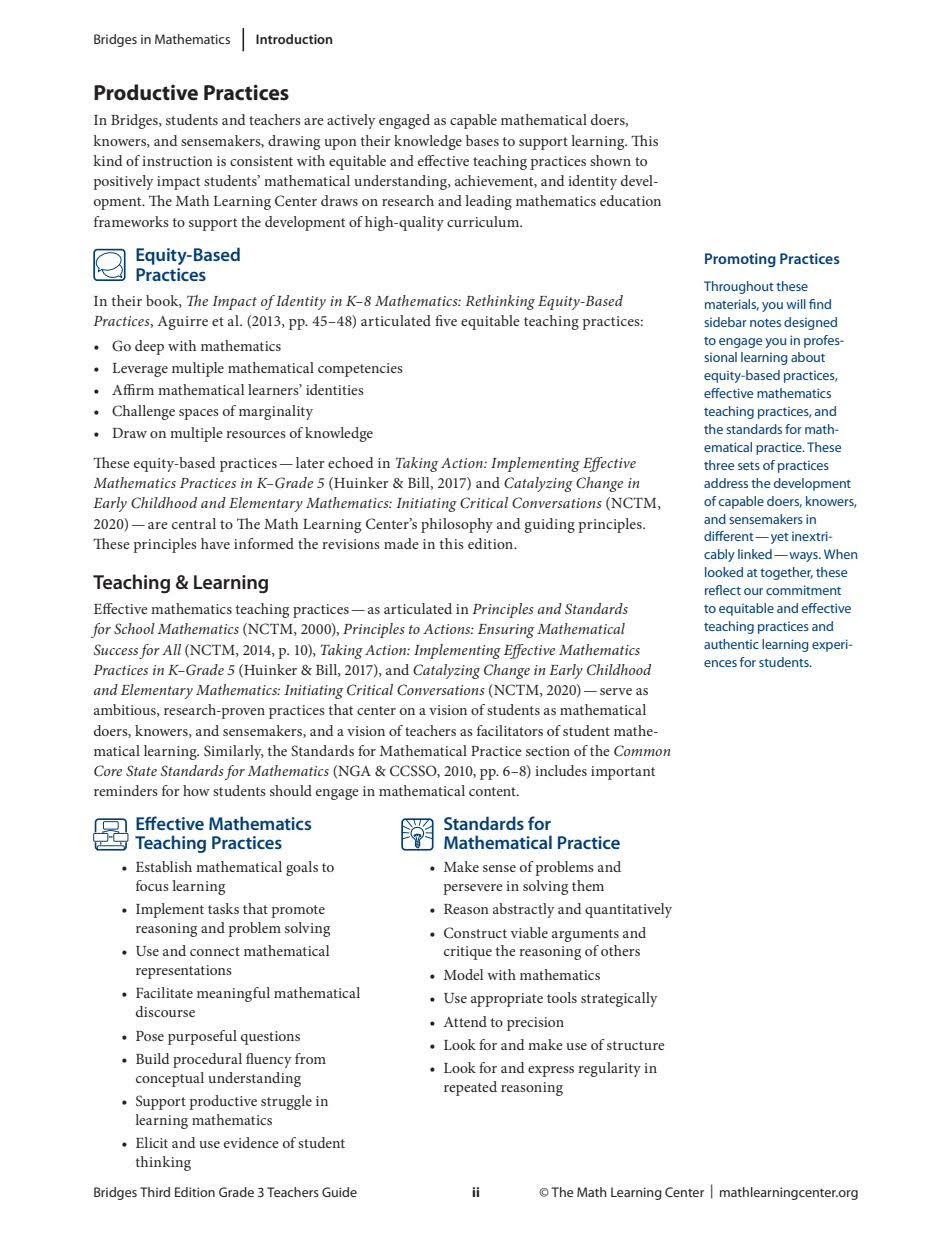
Bridges in Mathematics Third Edition provides curriculum maps, learning progressions, Mathematical Background, and session guidance to support teacher planning by connecting daily instruction to broader mathematical ideas across the year. Embedded Promoting Practices notes and implementation resources focus on equitable mathematics teaching, instructional decision-making, and classroom facilitation. Resources available through the Bridges Educator Site extend this support with self-study modules, classroom videos, and implementation guidance that teachers can access throughout the planning cycle.
Example+

Considerations

Lesson structure

While language supports are embedded throughout the program, review teams may wish to examine how consistently lesson-specific scaffolds are provided and what additional planning teachers may need when more general guidance is offered.

Breadth of tools

Some of the program's most comprehensive equity, Multilingual Learner, and professional learning resources are housed on the Bridges Educator Site rather than within the printed Teacher Guide. Districts should consider how teachers will become familiar with and routinely access these companion resources as part of planning and implementation.

Professional Learning

The breadth of digital tools, embedded resources, and planning components may require intentional onboarding to ensure teachers can navigate and prioritize materials effectively. District review teams should examine how easily teachers can locate, prioritize, and adapt materials within the platform.


To learn more about Professional Learning offerings for this program, please visit the publisher website and view the California Professional Learning Partner Guide (PLPG) which provides a vetted list of top organizations offering high-quality, curriculum-aligned professional learning services.

For a deeper look, consult the program profile

Compare this Curriculum

Bridges in Mathematics The Math Learning Center

For Districts That Need…

Materials that position all students as capable mathematical thinkers, bringing a range of assets to the table.
Materials that expect students to investigate problems, discuss ideas, identify patterns, and explain their reasoning throughout instruction.
An assessment system that emphasizes responding to student thinking as concepts develop.
Planning tools & PD for facilitating equitable, student-centered mathematics classrooms.

Ensure You Are Planning For…

Strategies for consistently incorporating Multilingual Learner strategies into every lesson.
Intentional use of companion site and resources to inform equitable instruction.

AI Summary

Both IMKH and Classroom Mathematics California are aligned to the California Math Framework and support conceptual understanding and mathematical reasoning, but they differ in structure and implementation design. The strongest choice will always depend on local needs, professional learning structures, the level of instructional coherence already in place and the evidence collected during the review.

AI-generated content is intended to support exploration, not replace district evaluation.

Methodology

Methodology Note

Between the Greens is designed to present narrative, expert-informed profiles of highly rated curriculum options. These do not evaluate effectiveness, assign ratings, or make adoption recommendations and should be considered alongside local priorities and additional committee review.

This report was created independently and was not written or sponsored by curriculum publishers.