




Amplify Desmos Math California: A K-12 comprehensive mathematics curriculum that combines problem-based instruction with interactive digital learning experiences to support mathematical reasoning, collaboration, assessment, and teacher planning.

Between the Greens

Amplify Desmos Math CA

Categories

Explore curriculum

Program Organization

Amplify Desmos Math California is a comprehensive mathematics curriculum that combines problem-based instruction with interactive digital learning experiences. Lessons are organized around mathematical investigations that encourage students to reason, discuss, and refine their thinking through both collaborative and technology-enhanced activities. The program includes integrated digital tools, assessments, and teacher resources that support planning, instruction, and ongoing monitoring of student learning.

Quick Overview

Reviewed by EdReports*
Meets Expectations for Alignment & Usability
Core Materials Printed
Student Digital Platform
LMS Integration
Illustrative Math Derivative
TK Program
Algebra 1/Math 1 Aligned
Full High School Aligned
Spanish Teachers' Edition

Design Highlights & Considerations

Design Highlights

Access & Scaffolds

Amplify Desmos Math California integrates Universal Design for Learning (UDL)-aligned scaffolds and differentiated Multilingual Learner supports directly into core lessons for grades K–8, developed in collaboration with the English Learners Success Forum (ELSF), including the Math Language Routines. Students have regular opportunities to use manipulatives, visual representations, and multiple pathways into the mathematics. The Math Language Development Resources ancillary extends the core lesson with lesson-specific scaffolds, frames, and routines aligned to each lesson's language goals.
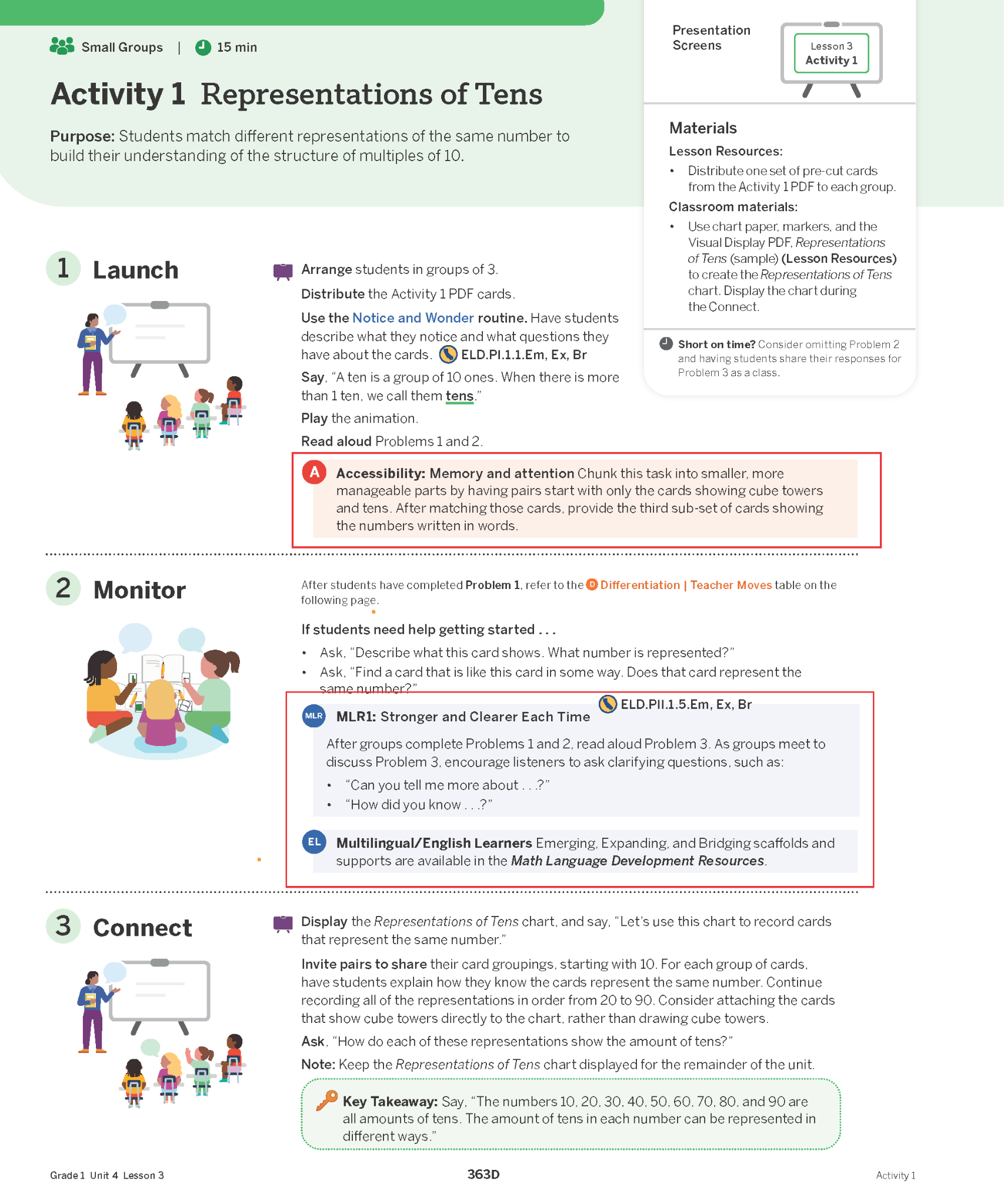
Example+

Open Tasks

In Amplify Desmos Math California, tasks and classroom discourse are central to how students develop mathematical understanding. Students are asked to explore, explain, compare, and refine mathematical ideas, while teachers use questioning and discussion to surface and connect student thinking before formalizing procedures. This instructional approach reflects many elements of the problem-based learning vision described in the California Mathematics Framework.
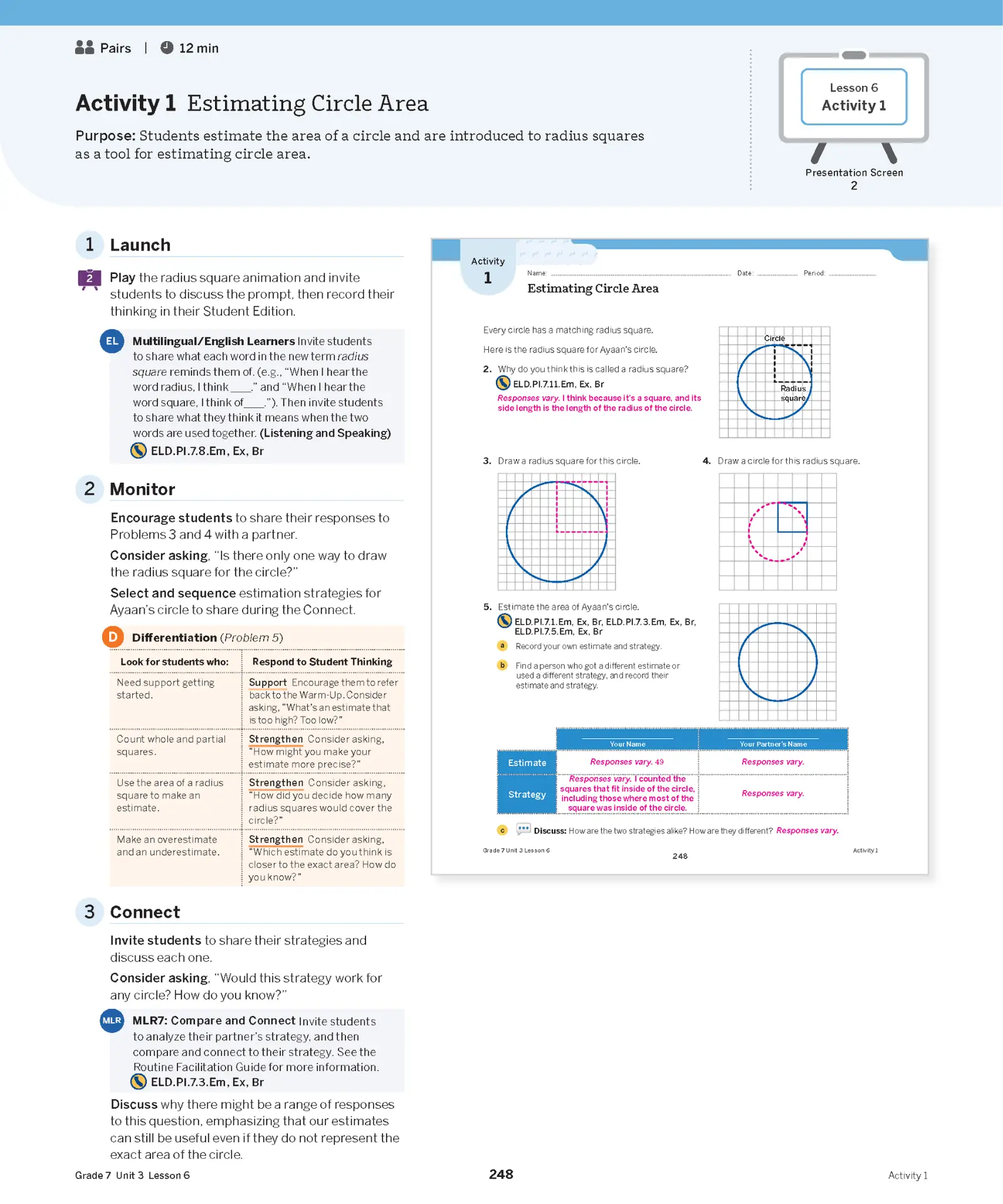
Example+

Assessment Tools

Amplify Desmos Math California integrates assessment throughout instruction and connects evidence of student thinking to planning and differentiation. Teachers gather information through daily activities, Show What You Know checks, quizzes, unit assessments, and mCLASS Benchmark assessments. The digital platform provides real-time access to student work and assessment results, while differentiation tools connect identified needs to Support, Strengthen, and Stretch resources, including Mini-Lessons and personalized practice. Students also have opportunities to reflect on their progress and growth over time.
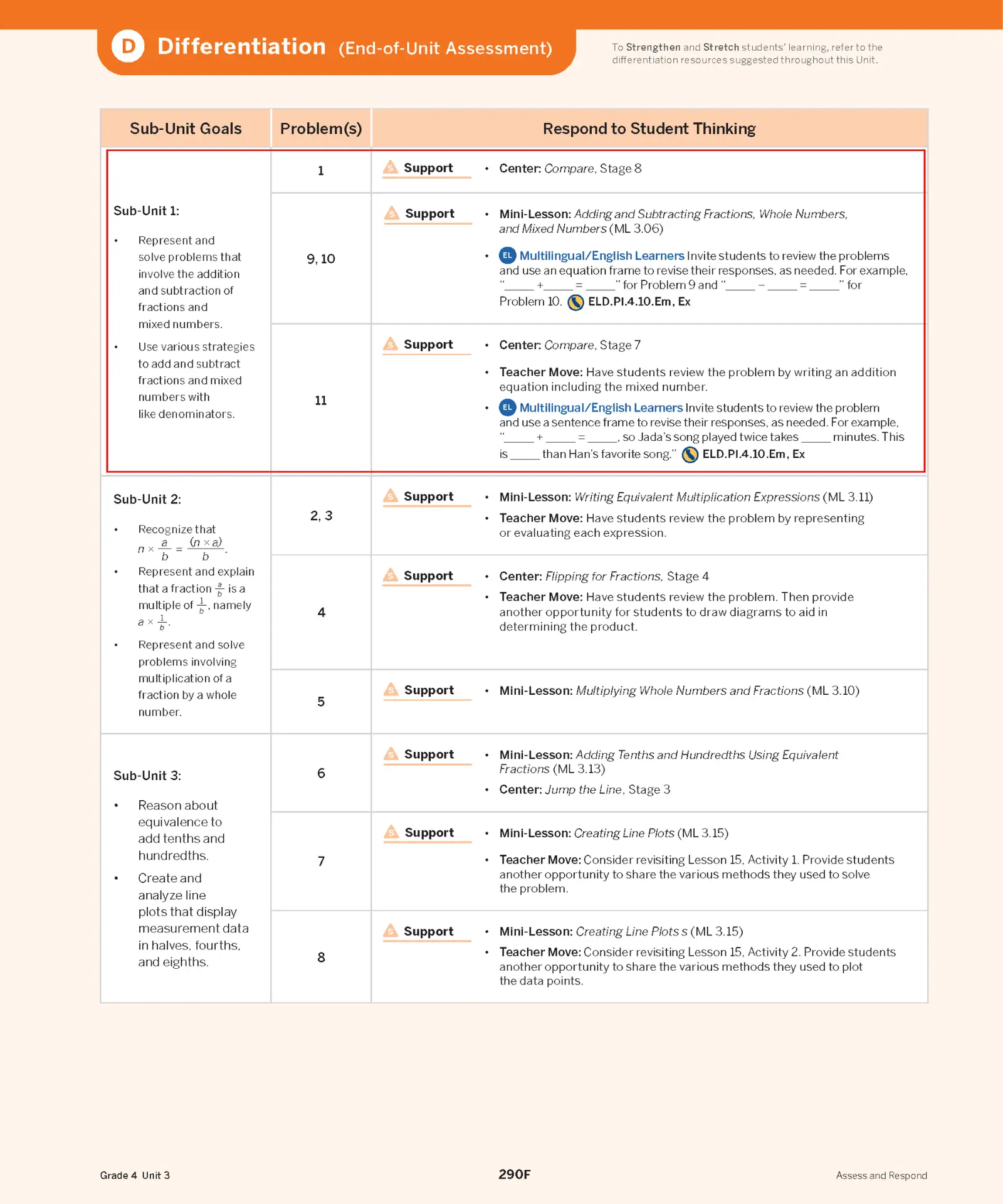
Example+

Teacher Planning & Knowledge

Desmos Classroom tools support teacher planning at all levels. The Program Models Guide provides implementation guidance for dual language, bilingual, Structured English Immersion, and other multilingual instructional models, helping teachers adapt the curriculum to their local context. Sociocultural story arcs and embedded professional learning reflection prompts further support teacher learning, while pacing considerations notes are included for specific lessons that may be omitted due to time constraints. These notes detail the content that would be missed and offer strategies for compensation, providing clear prioritization guidance rather than generic instructions to skip material.
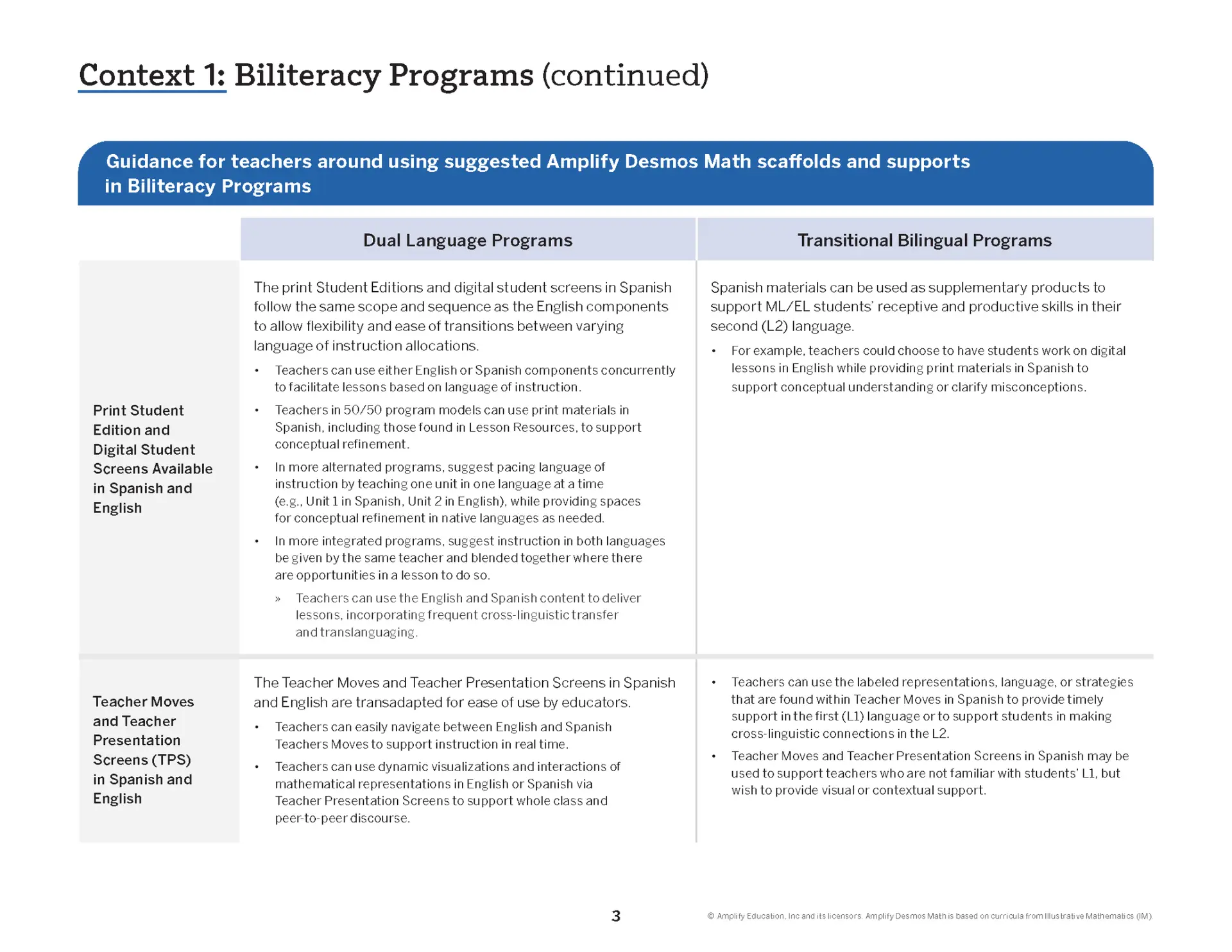
Example+

Considerations

Lesson structure

The program’s scaffolding, differentiation, and assessment-response system spans several volumes, including the Teacher Edition, Math Language Development Resources, and Intervention/Extension/Investigation Resources, as well as the Desmos Classroom digital platform. Districts should provide structured onboarding and dedicated planning time, especially in Year 1, to help teachers effectively navigate and coordinate these resources.

Breadth of tools

Print Student Editions are available for every lesson, but the most comprehensive accessibility tools, such as text-to-speech, enlarged font, Braille mode, the Desmos Teacher Dashboard, and Boost Personalized Learning, are only on the digital platform. Districts with limited device access should assess how the print-based scaffolding compares to the full digital accessibility experience.

Professional Learning

The breadth of digital tools, embedded resources, and planning components may require intentional onboarding to ensure teachers can navigate and prioritize materials effectively. District review teams should examine how easily teachers can locate, prioritize, and adapt materials within the platform.


To learn more about Professional Learning offerings for this program, please visit the publisher website and view the California Professional Learning Partner Guide (PLPG) which provides a vetted list of top organizations offering high-quality, curriculum-aligned professional learning services.

For a deeper look, consult the program profile

Compare this Curriculum

Amplify Desmos Math CA Amplify Education, Inc.

For Districts That Need…

Materials that integrate Universal Design for Learning (UDL) and language development strategies to provide multiple mathematical pathways for students.
Materials that consistently ask students to explore, explain, compare, and refine mathematical ideas before formalizing procedures.
Assessments that provide students regular opportunities to monitor their own progress and recognize growth as part of learning mathematics.
The materials that are designed to extend support beyond lesson planning to include mathematical content knowledge, instructional decision-making, and implementation guidance.

Ensure You Are Planning For…

How the print-based access experience compares to the full digital accessibility experience within their specific implementation context.
coaching to assist teachers in facilitating productive struggle prior to the formalization of ideas while maintaining cognitive demand.

AI Summary

Both IMKH and Classroom Mathematics California are aligned to the California Math Framework and support conceptual understanding and mathematical reasoning, but they differ in structure and implementation design. The strongest choice will always depend on local needs, professional learning structures, the level of instructional coherence already in place and the evidence collected during the review.

AI-generated content is intended to support exploration, not replace district evaluation.

Methodology

Methodology Note

Between the Greens is designed to present narrative, expert-informed profiles of highly rated curriculum options. These do not evaluate effectiveness, assign ratings, or make adoption recommendations and should be considered alongside local priorities and additional committee review.

This report was created independently and was not written or sponsored by curriculum publishers.